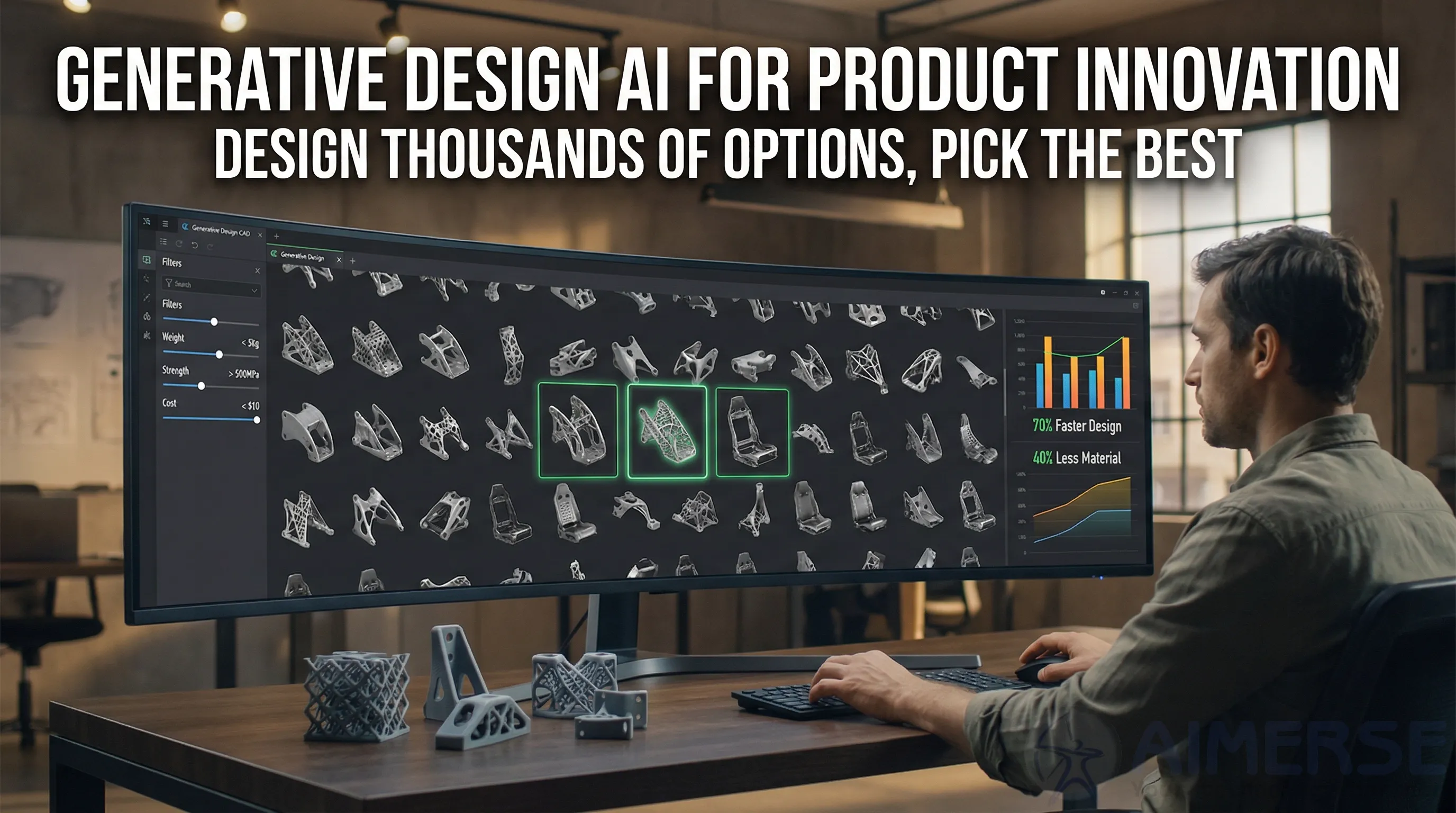
Generative Design AI for Product Innovation.
Generative AI is opening up a vast new landscape of design in 2026, all focused on finding the optimal mix of weight, strength, and cost.
How it works
Generative AI, together with genetic algorithms and machine learning, runs thousands of design possibilities within a given constraint. Software packages like Autodesk's Fusion 360, and many others, can reduce design time and material usage by up to 90%. Topology optimization, using cloud-based GPU clusters, can be up and running overnight to run through billions of possibilities and arrive at organically shaped solutions that are 30% lighter than what human engineers can accomplish.
Core Steps
- Input Constraints
- Generate a large population
- Evolve design
- Simulate
- Manufacturability
Frontend and Backend Glue
- React.js-based design galleries
- Django-based simulation queues
Industrial Applications
- Aerospace
- Automotive
- Consumer Electronics
ROI
- Cost benefits are realized in six months or less
Challenges
- Interpretability of results
- Balancing multiple objectives
Workflow
- Objectives and Constraints
- Generate overnight
- Engineer selects top 3
- Prototyping
Bottom Line
Generative AI is revolutionizing innovation in 2026 by leveraging computation as a driver of creativity. With design galleries built using React.js, simulations queued up using Node.js, and optimization engines using Python and Django, generative AI is opening up design possibilities that human minds alone could not possibly conceive.