Sustainable Cloud Migration Strategies.
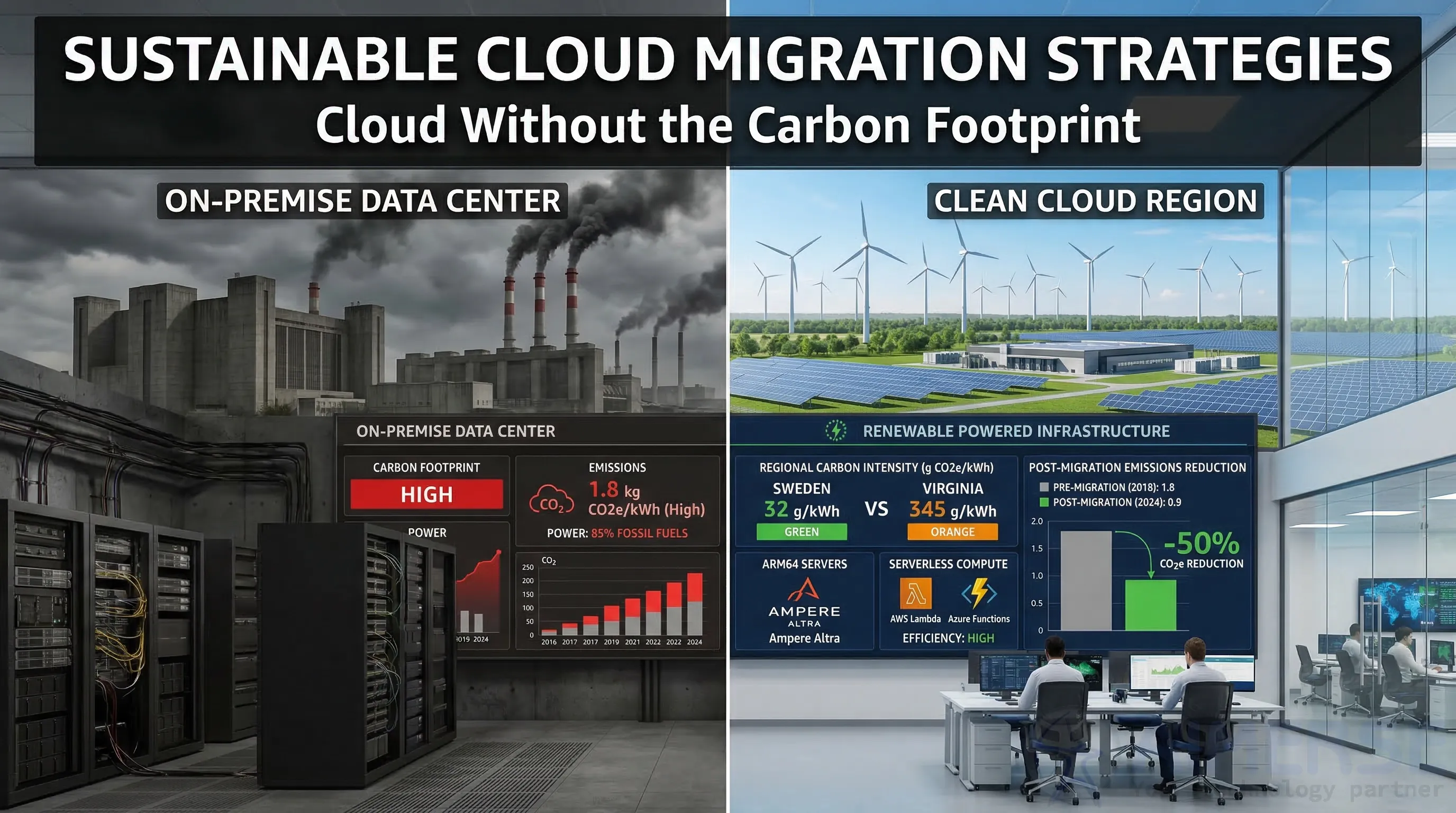
Aims to target the low-carbon transition across various regions and architectures in 2026. Currently, cloud contributes to 2% of the total CO2 emissions worldwide. By 2026, the EU will demand the reporting of Scope 3 emissions. The strategy aims to cut these emissions by 50% or more, with the use of carbon calculators like AWS, GCP, and Azure to direct workloads towards low-carbon zones like Sweden, with emissions below 300 gCO2/kWh, compared to 450 gCO2/kWh in Virginia. Arm64 provides 60% greener performance compared to x86. Serverless models will be used to cut idle wastage by up to 90%.
Green Migration Tactics
- Selecting the region with hourly carbon intensity data.
- Right-sizing with the use of ML to cut over-provisioning costs by approximately 30%.
- Using containers, Kubernetes, and autoscaling, and spot instances.
- Data gravity: processing data at the edge to cut down on data transfer emissions.
Common Tools and Software You’ll Be Using: Django carbon trackers and Node.js schedulers.
Quantified Wins
- Google aims to use 1.5 billion kWh of renewable energy.
- Microsoft aims to be carbon negative by 2030.
- Migration will cut the carbon footprint by 40%.
Tools and Frameworks
- Cloud Carbon Footprint and Green Software Observatory.
- FinOps, which will be in line with the green KPIs.
Step-by-Step Guide
- Audit the existing baseline emissions.
- Optimize the workload locally.
- Select the green cloud providers and regions.
- Continuously monitor and adapt.
Conclusion
A cloud-migration strategy in 2026 will be more sustainable and greener, with performance and sustainability combined. Create and build a green cloud stack with the use of React.js, Node.js, Python, Django, Laravel, and Java Spring Boot. This will lead to the development of a smarter and greener cloud, which will be more efficient and effective in the future with the use of the best technology in an eco-friendly way.